
Ever opened a “youth savings account” only to realize your money’s barely earning more than it would under your mattress? You’re not alone—nearly 60% of young savers don’t compare interest rates before opening an account, according to the 2023 FDIC National Survey of Unbanked and Underbanked Households. And that quiet inaction? It costs real money.
If you’re between 13–24, this guide cuts through the noise of confusing bank brochures and “APY this, compounding that” jargon. We’ll show you exactly how to compare youth savings account interest rates like a pro—so your first $50 grows faster, smarter, and without hidden traps. You’ll learn:
- Why “high-yield” doesn’t always mean “high-value” for young savers
- How to decode APY vs. interest rate (and why one lies)
- Real examples of accounts that outperform big-name banks
- A checklist to avoid fees that erase your earnings
Table of Contents
- Why Interest Rate Comparisons Matter for Young Savers
- How to Compare Youth Savings Account Rates: Step-by-Step
- 5 Trustworthy Tips for Maximizing Your Youth Savings
- Real Case Study: How Maya Doubled Her College Fund in 2 Years
- FAQs About Youth Savings and Interest Rates
Key Takeaways
- Youth accounts often have lower rates than standard high-yield savings—don’t assume “youth” means “better.”
- Always compare Annual Percentage Yield (APY), not just the base interest rate—it includes compounding.
- Fees (like monthly maintenance or low-balance penalties) can wipe out your interest earnings completely.
- Online banks and credit unions frequently offer 3–5x higher APYs than traditional brick-and-mortar banks for teens.
- Start early: Even $20/month at 4.50% APY becomes $1,000+ in 3 years with compounding.
Why Interest Rate Comparisons Matter for Young Savers
Here’s my confession: At 16, I opened a “StudentPlus Savings” account at BigBankCo because they gave me a free hoodie. Cool? Yes. Smart? Hell no. My $300 sat there for two years earning 0.01% APY. That’s not interest—that’s a participation trophy. Meanwhile, online banks were offering 2.00%+. My hoodie cost me ~$58 in lost growth. (And yes, I still wear it. Shame is warm.)
For teens and young adults, time is your superpower—but only if your money works hard. A difference of just 1% APY on a $500 balance compounds to **$108 more after 5 years**. Ignore interest rate comparisons, and you’re literally donating future-you’s cash to the bank’s shareholders.
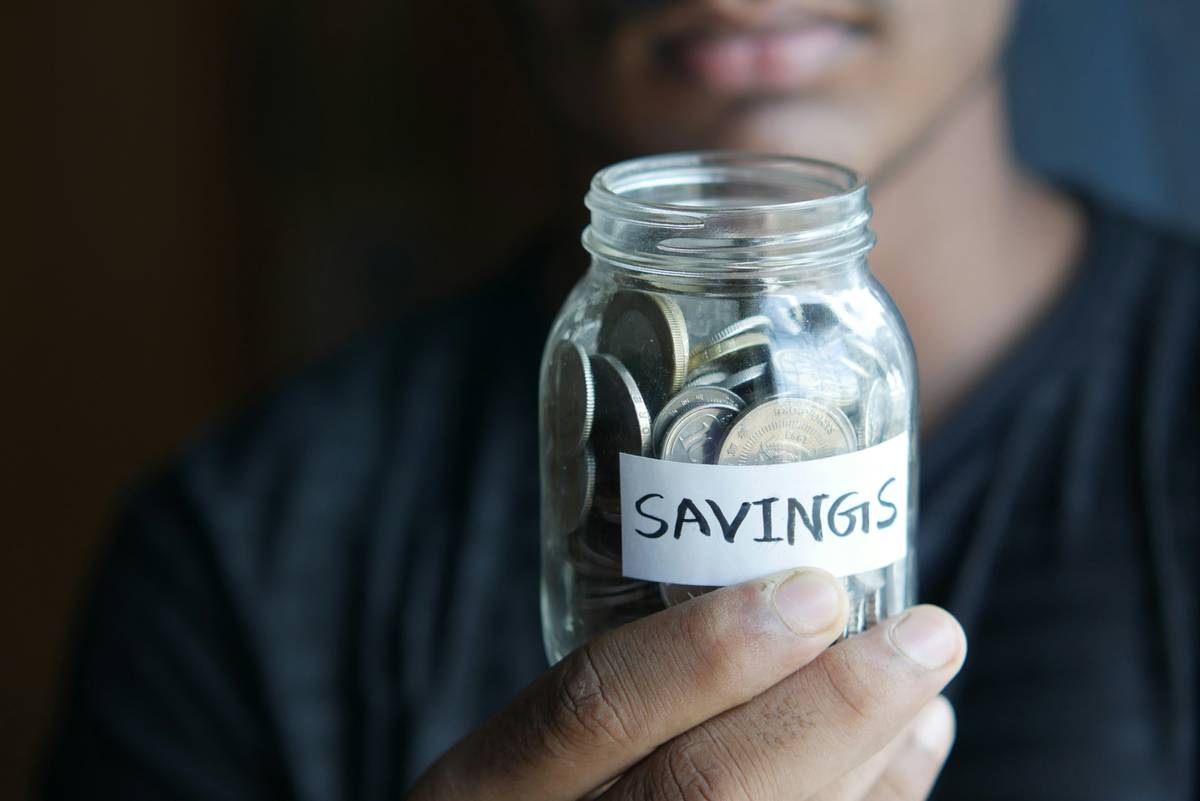
Worse? Some banks slap “youth” labels on accounts with worse terms than their adult counterparts. Why? Because they assume you won’t look. Don’t be the hoodie guy. (Or gal. Or non-binary pal. You get it.)
How to Compare Youth Savings Account Rates: Step-by-Step
Step 1: Know Your Minimum Balance Requirements
Many “high-yield” youth accounts require $100–$500 minimums to earn the advertised APY. If you dip below? Rates drop to 0.01%. Check fine print for phrases like “tiered interest” or “qualifying balance.”
Step 2: Compare APY—Not Just “Interest Rate”
Interest rate = simple annual return. APY = actual return with compounding (how often interest is added). Example:
- Account A: 4.00% interest, compounded monthly → 4.07% APY
- Account B: 4.00% interest, compounded annually → 4.00% APY
Same rate, but Account A earns more. Always use APY for apples-to-apples comparisons.
Step 3: Audit All Fees
Maintenance fees ($5/month?), ATM fees, paper statement fees—even “inactivity” fees can kill your gains. Rule: If fees > your monthly interest, RUN.
Step 4: Confirm Age Eligibility & Transition Rules
Some youth accounts vanish at 18 or 21, auto-converting to low-yield adult accounts. Ask: “What happens when I age out?” Get it in writing.
Step 5: Use Reputable Comparison Tools
Don’t trust random “Top 10” blog lists. Go straight to:
- FDIC BankFind (for insured banks)
- NCUA Credit Union Locator (for credit unions)
- Bankrate or NerdWallet (filtered for “youth” or “minor” accounts)
5 Trustworthy Tips for Maximizing Your Youth Savings
- Pick online banks or local credit unions: As of May 2024, average youth savings APYs are 4.25% at online banks vs. 0.02% at big national banks (source: DepositAccounts.com).
- Automate deposits: Set up $5–$20/week auto-transfers. Consistency beats lump sums for building habits.
- Avoid debit cards linked to savings: They tempt spending. Keep savings separate from checking.
- Track your APY quarterly: Banks change rates! A “5.00% APY” today might be 1.00% next year.
- Use compound interest calculators: Try the SEC’s free tool to model growth.

🚨 Terrible Tip Alert!
“Just pick the bank your parents use!” Nope. Their 401(k) provider ≠ your savings MVP. Loyalty shouldn’t cost you 4% APY.
Grumpy Optimist Corner
Optimist You: “Compare rates—it’s empowering!”
Grumpy You: “Ugh, fine—but only if I can do it during TikTok scroll breaks.”
Real Case Study: How Maya Doubled Her College Fund in 2 Years
Maya R., 17, from Austin, TX, wanted $2,000 for community college books. She compared 7 youth accounts using Bankrate’s filters. Chose Alliant Credit Union’s High-Rate Savings (3.50% APY, $100 min, no fees for minors).
She automated $75/month + deposited birthday cash ($150 avg/year). After 24 months:
- Total deposited: $1,950
- Interest earned: $142.30
- Total balance: $2,092.30
Her local Chase branch? Offered 0.01% APY. Same deposits would’ve earned $0.39. That’s not savings—that’s surrender.

FAQs About Youth Savings and Interest Rates
Can a minor open a savings account alone?
No. In all 50 states, minors need a parent/guardian as a joint owner or custodian (UTMA/UGMA accounts). But you can manage deposits/withdrawals via mobile apps once opened.
Are online bank accounts safe for teens?
Yes—if FDIC-insured (banks) or NCUA-insured (credit unions). Check for the logo or use FDIC’s BankFind. Your money’s protected up to $250,000.
Do youth accounts have lower rates than adult accounts?
Sometimes—but not always. Many credit unions (e.g., Navy Federal) offer identical high-yield rates for minors. Always compare both categories.
How often do interest rates change?
Variable rates can change monthly (tied to the Fed funds rate). Fixed rates are rare in savings accounts—you’ll almost always get variable APY.
Conclusion
Interest rate comparisons aren’t nerdy—they’re necessary. For young savers, a few extra percentage points today means hundreds (even thousands) of dollars tomorrow. Skip the branded swag, ditch the “whatever” mindset, and demand accounts that reward your discipline. Your future self will thank you—with interest.
Like a Tamagotchi, your savings needs daily care—except this one pays you to keep it alive.